
I used to own around 150 pieces and still stand in front of the wardrobe every morning with nothing to wear. The clothes weren’t the problem. The way I was using them was.
I’m the developer of UByDesign, a digital wardrobe app, and I built it because I had this exact problem. This article is the system I worked out for myself: five rules that make styling outfits easy, which I now use to build a small capsule wardrobe every month. I’ve kept it practical, and you don’t need an app to use any of it.
The five rules at a glance
- Sort your clothes by colour temperature.
- Give every piece a role.
- Know your two shapes.
- Fix your slots.
- Save your capsule and repeat.
Rule 1: Sort by temperature
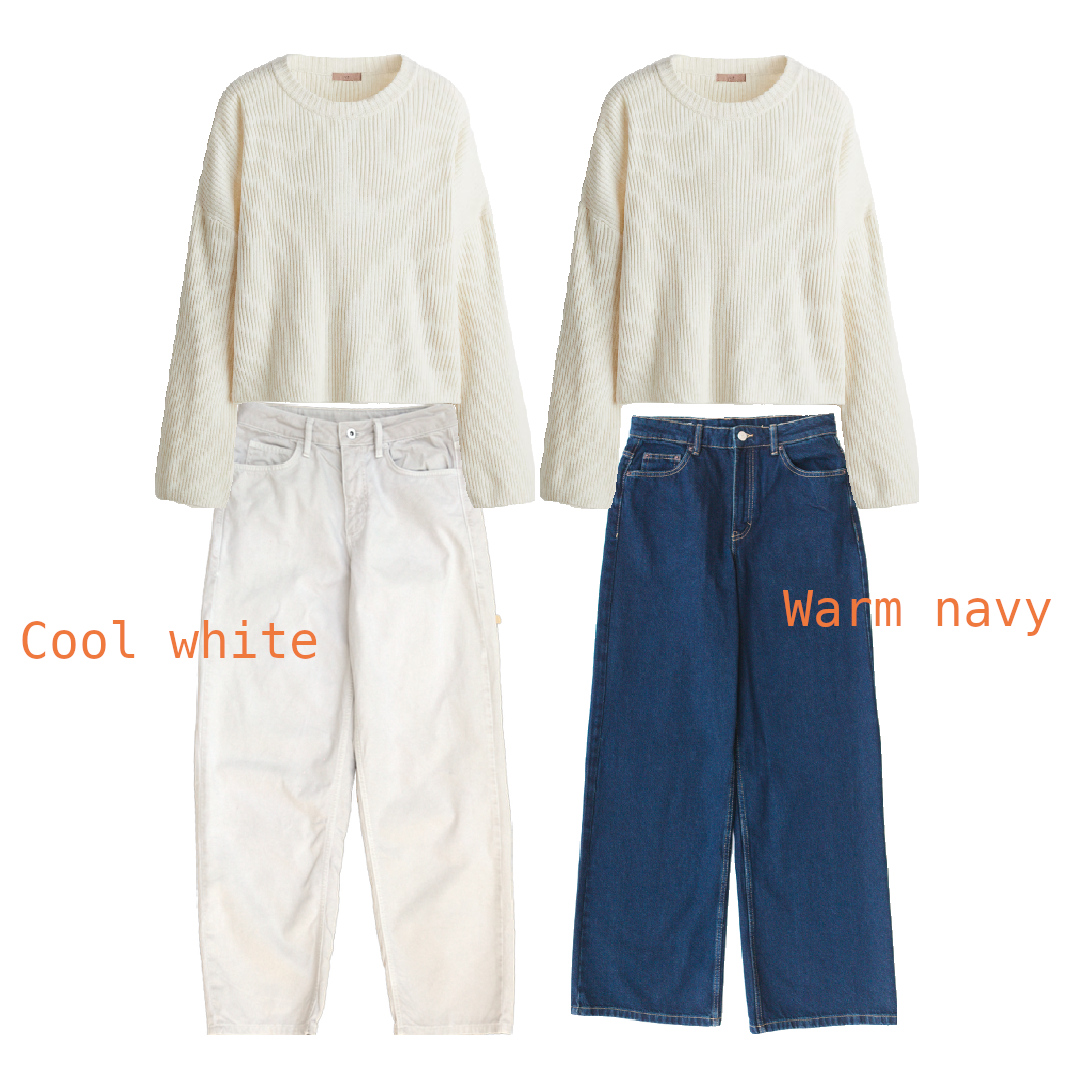
Most outfits that feel ‘off’ aren’t badly matched in colour. They clash in undertone. Even neutrals have a temperature: a grey can lean warm and yellowish or cool and bluish, and a beige can lean grey or yellow. Put a warm yellowish grey sweater next to bluish snow-white trousers and the pair looks wrong, even though both are ‘neutral’.
Sort every piece into three groups:
- Cool anchors: black, navy and denim.
- Bridge colours: cream, oatmeal, olive, chocolate and white. These sit comfortably next to both warm and cool pieces.
- Warm pieces: tan, camel, cognac, orange and burgundy.
Then build each outfit the same way: a cool anchor at the bottom, a bridge-coloured top, and one warm layer on top. Repeat the warm tone once more in a belt or your shoes, so it looks planned.
The reason it works is simple. A warm piece next to a clearly cool one looks intentional. A warm piece next to an in-between neutral looks like a mistake.
If you can’t tell which group a piece belongs to, hold it against a plain sheet of white paper in daylight. The tint shows up straight away.
Rule 2: Every piece needs a role
A piece earns its place if it makes at least three outfits with things you already own. If you can’t name the outfit before you buy it, don’t buy it.
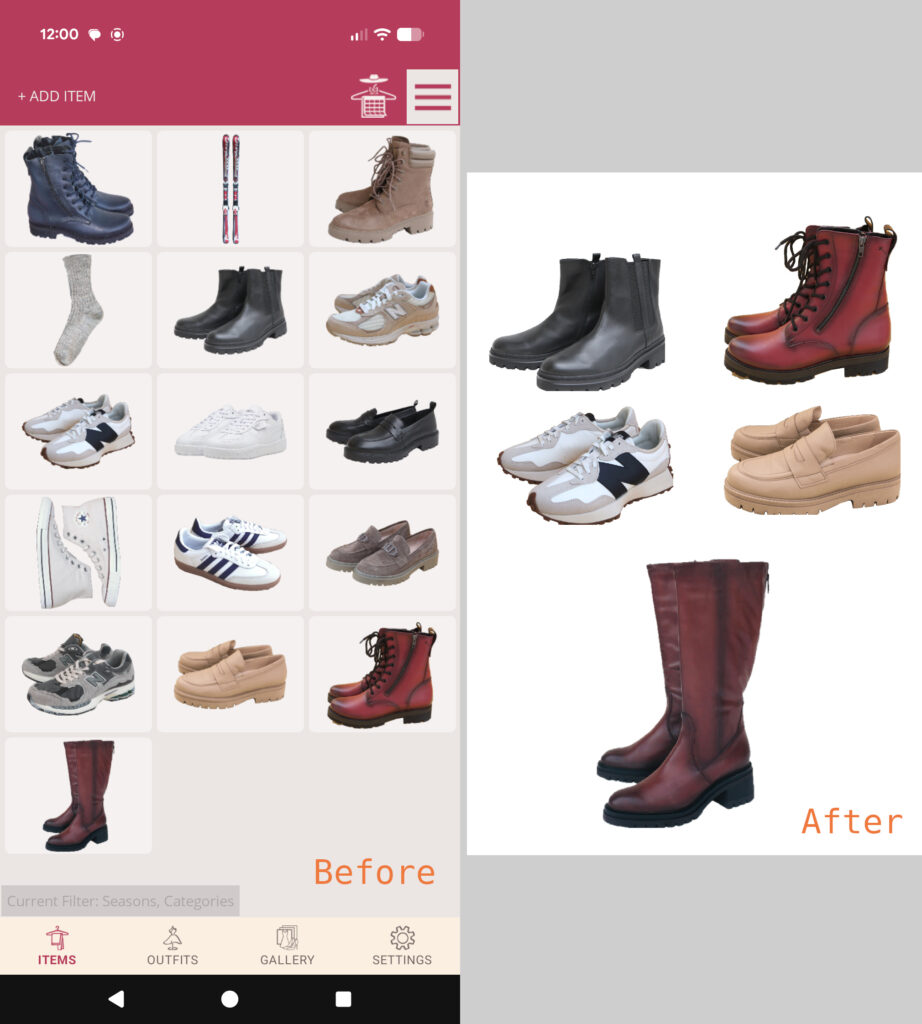
I learned this from my shoes. For years I bought pairs because I liked them, not because they had a job. Some matched nothing I wore, and others copied a more versatile pair. Now every pair is warm, cool or works with both, and each one has a role.
Run the same test on everything you own. Pieces that fail are orphans, and orphans are what make mornings hard.
Rule 3: Know your two shapes
Looking good isn’t only about colour, it’s also about proportion. I’m tall and slim with a rectangular shape, and I found that a regular fit on both the top and the bottom is the least flattering choice for me. What works is a loose top with structured bottoms, or a fitted top with loose bottoms. Loose on both works too, and fitted on both if nothing else is available. I define my waist with a belt or a belted coat. And because I have long legs, fitted bottoms with heels make me look out of proportion.
That’s my answer, not a rule for everyone. The method is what carries over: try fitted and loose tops with fitted and loose bottoms, photograph each combination, and keep the two shapes that look best on you. Then stop experimenting. Donate or store what only works in the shapes you’ve ruled out.
Rule 4: Fix your slots
Set a number for each category: layers, tops, bottoms, shoes. A new piece only comes in if one goes out. What’s resting goes into storage instead of the bin, so it can return when the season changes.
This is where variety comes from. It doesn’t come from owning more, it comes from rotating what’s within reach.
A few buying rules help the slots hold:
- Keep a short, written list of what you actually need.
- Allow only two or three new pieces per shopping trip.
- Anything off the list has to replace a specific piece you already own.
- Give each new piece a 30-day trial before it stays.
Rule 5: Save your capsule and repeat
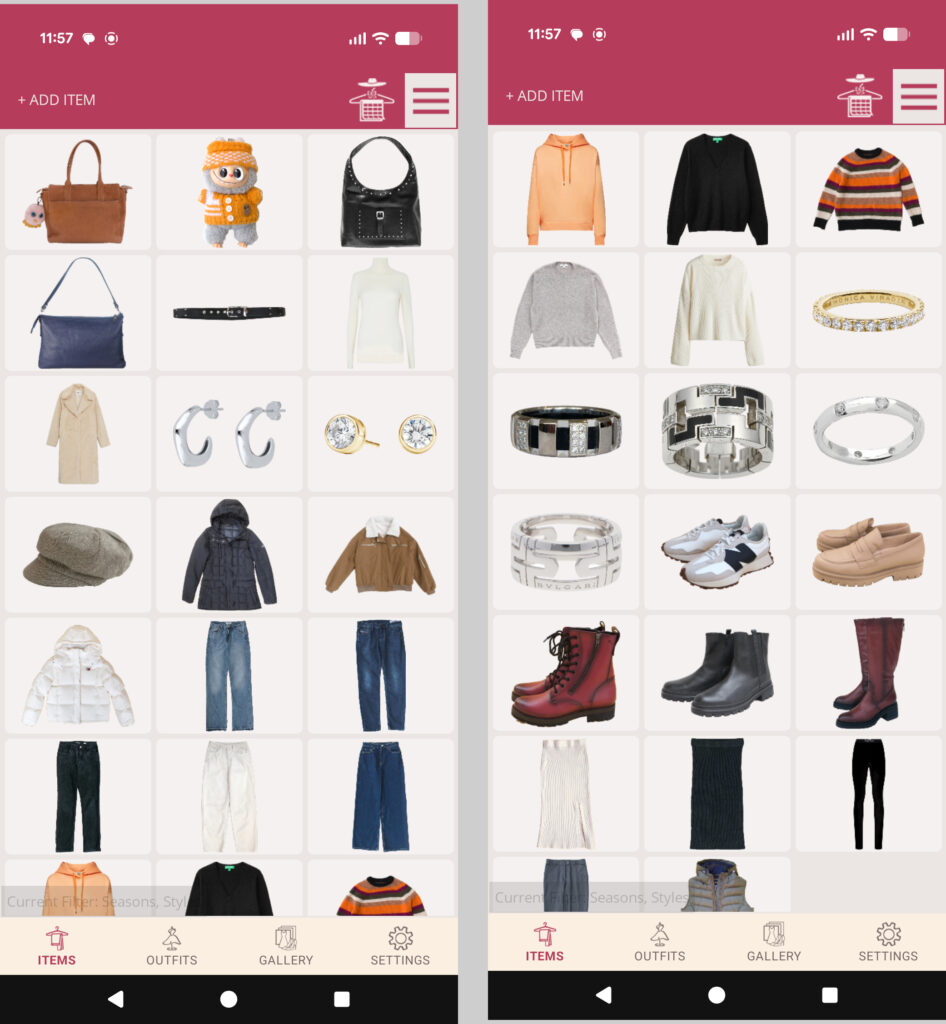
Build the capsule for the coming month’s weather, save it, and next year you start with something already chosen. My wardrobe is digitised, so I pick pieces on my phone instead of piling clothes up in the wardrobe room, and I can save the arrangement and meet next November with a capsule ready to wear.
You can do the same without an app. Photograph each piece, keep a folder or a note for each month, and list the pieces in your capsule. An app makes it faster, but a phone album works.
How to start today
- Photograph what you own, or start with your shoes only.
- Sort everything into cool, warm and bridge.
- Find your two shapes.
- Run the role test and set aside the orphans.
- Set your slots and build next month’s capsule.
If you only do one thing today, sort your shoes into warm, cool and both, and count how many don’t belong anywhere.
Questions I get asked
How many pieces should a capsule wardrobe have? There’s no fixed number. Mine changes with the season, and this month it has 36 pieces. Start with an amount that lets you put together outfits without effort, and adjust from there.
Do I need an app? No. The rules work with a notebook and photos. I built UByDesign because I wanted the sorting and saving to be quicker, but it’s a convenience, not a requirement.
What if my wardrobe mixes warm and cool colours? That’s the normal situation, and the three-group sort is made for it. Warm pieces work next to clearly cool anchors and bridge colours, and the trouble starts with the in-between neutrals.
Does this work for every body shape? The method does: test your combinations and keep the two that work. The two shapes I describe are the ones that work on me.
Try it yourself
If you’d like to try it digitally, the online outfit stylist on this site lets you drag pieces onto a canvas and export the outfit as an image. The UByDesign app is on the App Store and Google Play.
You can watch the full video here: https://youtu.be/2ii8N3eB_Yc?si=tKfbtMQwyAP6bv_J. Next month: the December capsule.